Case Study with Deloitte
Civeys communication study enabled us to conduct a data-driven analysis of how entrepreneurs perceive the CO2 border adjustment mechanism. The precise survey results helped us tailor our communication strategy and guide the discussion based on facts. The fact that the study was picked up by numerous media outlets and agencies nationwide demonstrates the significant impact of data-driven communication. Our collaboration with Civey was efficient, professional, and significantly strengthened our approach.
About Deloitte
Deloitte provides leading audit and consulting services to nearly 90% of the Fortune Global 500® companies and thousands of private companies. Legal services in Germany are provided by Deloitte Legal. The firm’s professionals deliver measurable, long-term results that help strengthen public confidence in the capital markets and support its clients through change and growth. Deloitte builds on 180 years of history and operates in more than 150 countries.
Background
The Carbon Border Adjustment Mechanism (CBAM) is an EU mechanism that will be phased in starting in 2026 to place a price on CO2 emissions from imported goods, thereby protecting the competitiveness of European companies that adhere to high climate standards. It affects energy-intensive sectors such as steel, aluminum, cement, fertilizers, electricity, and hydrogen by requiring importers to purchase allowances that correspond to the cost of CO2 in the EU. The goal is to prevent “carbon leakage”—that is, the relocation of emission-intensive production to countries with lower climate standards—while simultaneously creating incentives for global decarbonization.
For consulting firms such as Deloitte, CBAM presents significant business opportunities, as companies will need support with regulatory compliance and emissions calculations, permit management, and strategic adjustments. Additionally, there is potential in the digitization and automation of reporting processes, as well as in consulting on the sustainable transformation of supply chains.

The Goal
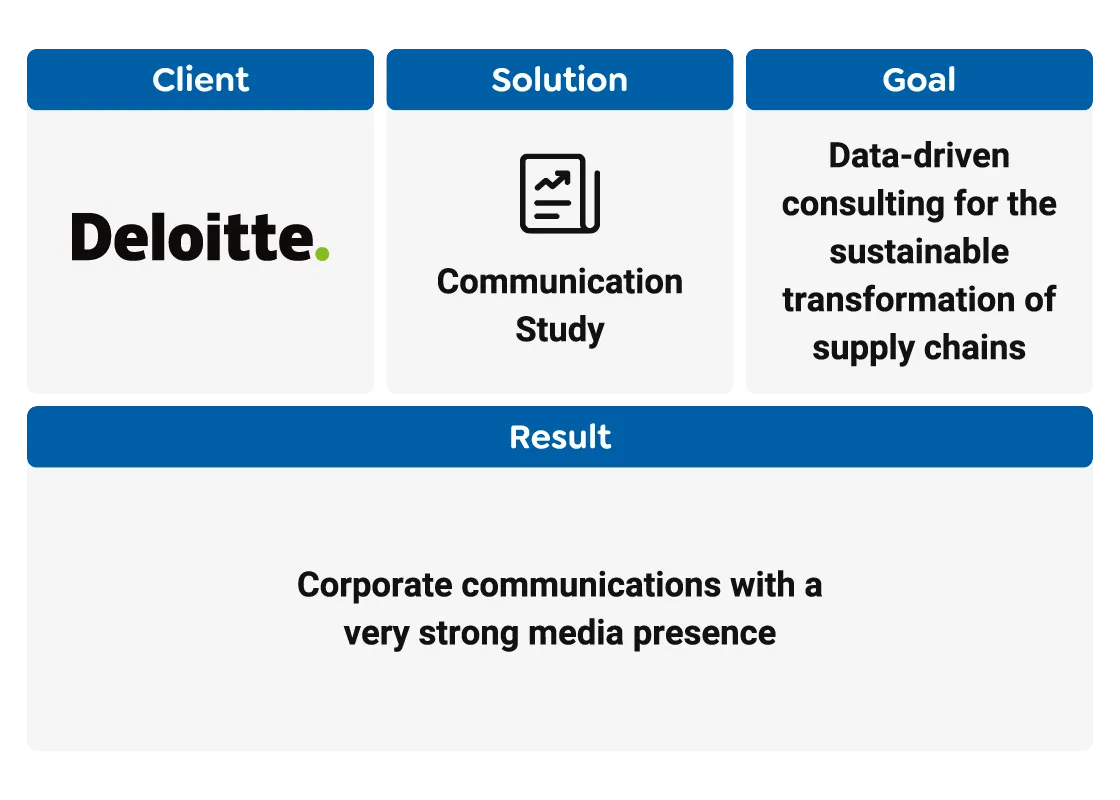
Through targeted communication based on representative real-time data, our client, Deloitte, aims to raise awareness of the CO2 border adjustment mechanism and position itself as a suitable partner for advising affected companies.

Our Solution
As part of a communications study, Civey surveyed private-sector decision-makers at companies that import certain products from countries outside the European Union, as well as those who are also familiar with the carbon border adjustment mechanism. The study focused on the financial consequences for the affected companies and the impact on their competitiveness.
The Results
About half of the private-sector decision-makers surveyed stated that they are affected by the reporting requirement under the CO2 border adjustment mechanism. A clear majority also expects rising costs for their companies as well as negative impacts on their own competitiveness. Based on these new findings, the communication study was picked up and published by dpa and numerous other media outlets.
The study’s success for Deloitte can thus be viewed in both the short and long term. While the study helped generate significant public attention for the consulting firm, it also provides important, sustainable opportunities to engage new potential clients in the area of strategic consulting.
Curious?
Our experienced consultants would be happy to discuss with you the opportunities Civey can offer your company. Simply schedule a no-obligation consultation. We look forward to speaking with you.